By Editorial Team
The scent of warm wax and lavender usually filled “Smooth Touch Studio” on Peachtree Road, a familiar comfort to its loyal clientele. But lately, owner Maria Rodriguez felt a chill. Her service bookings were steady, even growing, yet her overall revenue barely budged. “It’s like we’re leaving money on the table,” she confessed to me during our initial consultation, her voice tinged with frustration. She knew waxing retail could boost her bottom line, but she just couldn’t crack the code on how to effectively integrate salon products into her service-focused business model and drive those crucial aftercare sales. Her story isn’t unique; many independent salon owners struggle with this exact problem, focusing so intently on the service itself that they overlook the immense potential in what happens before and after the wax. The question isn’t if retail works, but how to make it work for you.
Key Takeaways
- Implement a mandatory, brief post-service consultation for every client, focusing solely on two to three specific aftercare products.
- Train all staff members on product knowledge and sales techniques, allocating at least two hours per month for dedicated retail education.
- Integrate product usage directly into the waxing service itself, demonstrating benefits with a tangible product application.
- Track retail sales per client and per service provider, offering performance-based incentives to motivate staff.
- Design a visually appealing and easily accessible retail display that highlights problem/solution pairings rather than just individual products.
Maria’s dilemma was a classic one. Her studio, nestled just a few blocks from the bustling Buckhead Village District, had built a stellar reputation for its meticulous services and welcoming atmosphere. Clients loved her technicians, and reviews consistently praised the comfort of the waxing experience. Yet, when I reviewed her sales data from the previous quarter, the retail contribution was a paltry 8%. For a business of her size, aiming for 20-30% retail revenue is not just ambitious, it’s essential for sustained growth and profitability. “We have shelves of product,” she gestured, “but they just sit there.”
My first recommendation to Maria was direct: shift the mindset from selling to educating. Nobody wants to feel “sold to,” especially not after a relaxing service. What clients crave is solutions. They trust their technician, and that trust is a powerful, often untapped, sales tool. I once worked with a salon in Midtown Atlanta that had a similar issue. Their staff would simply point to a display and say, “Here’s our aftercare.” Unsurprisingly, sales were abysmal. We completely overhauled their approach, focusing on how specific products solved common post-wax concerns like ingrown hairs or redness. The difference was immediate and significant.
The core of Maria’s problem, as I quickly identified, was a lack of structured retail integration. Her technicians were excellent at waxing, but they weren’t trained as product experts or consultants. We needed to empower them. This meant more than just knowing what a product did; it meant understanding why it was relevant to a specific client’s skin type and concerns. According to a 2024 survey by the Professional Beauty Association (PBA), salons with dedicated retail training programs report an average 15% higher retail revenue compared to those without. A PBA report found that consistent product education is a key differentiator for high-performing salons.
Our strategy began with a deep dive into Maria’s existing product line. She carried a decent range of professional-grade aftercare items: soothing balms, exfoliating serums, and hydrating lotions. The products themselves weren’t the issue. The issue was how they were presented. We categorized them by specific client problems: “For Ingrown Hair Prevention,” “For Sensitive Skin Post-Wax,” “For Lasting Smoothness.” This immediate reframing made the products less intimidating and more approachable for both staff and clients.
Next, we tackled staff training. This wasn’t a one-off seminar; it was an ongoing process. We scheduled weekly 30-minute sessions for all technicians. During these sessions, we did more than just read product labels. We discussed common client complaints, and then identified which products directly addressed those issues. We role-played sales scenarios, focusing on open-ended questions and empathetic listening. For instance, instead of “Do you need any aftercare today?” the new approach became, “To help prevent any redness and keep your skin feeling calm, I highly recommend our soothing botanical balm. It contains aloe and chamomile, which are fantastic for post-wax sensitivity. Would you like me to add one to your service today?” This subtle but powerful shift in language made all the difference.
Nervous about your first wax? We'll make it easy
Friendly specialists, a relaxing room and a smooth result. Find a welcoming studio near you.
Find a Studio Near You →One of the most effective techniques we implemented was the “demonstrate and recommend” approach. During the actual waxing service, after the hair removal, the technician would apply a small amount of a specific aftercare product directly to the client’s skin. “This hydrating oil,” a technician might say, “is excellent for calming the skin immediately after waxing and preventing dryness. See how quickly it absorbs?” This tactile experience, combined with the expert recommendation, created a powerful connection. It wasn’t just a product on a shelf; it was a tangible benefit applied by a trusted professional.
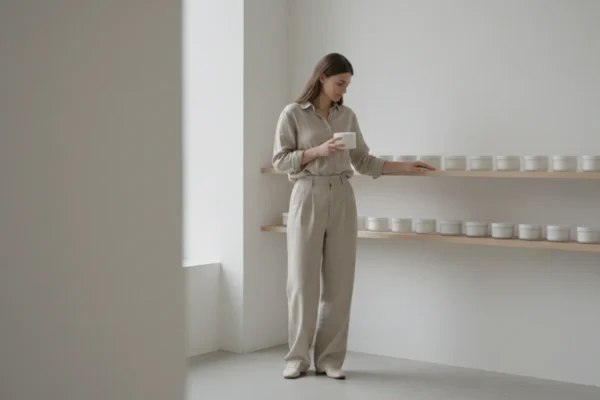
I also advised Maria to rethink her retail display. It was functional but uninspired. We moved it closer to the reception desk, making it the first and last thing clients saw. We invested in better lighting and clear, concise signage that highlighted benefits over ingredients. Instead of “Exfoliating Scrub,” a sign would read, “Say Goodbye to Ingrown Hairs: Gentle Exfoliation for Smooth Skin.” This problem/solution framing is incredibly effective because it speaks directly to a client’s pain points. People don’t buy products; they buy better versions of themselves.
Within three months, Maria saw a noticeable improvement. Her retail revenue climbed from 8% to 14%. But we weren’t done. The next phase involved incentivizing her team. We introduced a commission structure where technicians earned a small percentage of their retail sales. This wasn’t about pushing products aggressively; it was about rewarding their efforts in educating clients and providing complete solutions. We also implemented a friendly competition, tracking individual retail sales and recognizing top performers during team meetings. This fostered a sense of healthy competition and shared success.
One particular success story emerged from this period. A technician named Sarah, who had initially been hesitant about retail, embraced the new training. She started paying close attention to client conversations during the service. If a client mentioned struggling with bumpy skin after waxing, Sarah would immediately suggest a specific exfoliating serum, explaining its benefits and demonstrating its application. Within six months, Sarah became Maria’s top retail performer, consistently contributing over 25% of her total service revenue in product sales. Her confidence grew, and her clients appreciated her personalized recommendations. It was a clear demonstration that when staff are supported and educated, they can become powerful advocates for your retail offerings.
We also leveraged technology. Maria started using her salon’s CRM system, Vagaro, to track client purchase history. This allowed technicians to see what products a client had bought previously and to recommend complementary items or remind them to repurchase. For instance, if a client bought a soothing balm three months ago, the system would flag it, prompting the technician to ask, “How has the soothing balm been working for you? Are you running low?” This personalized touch further solidified client trust and boosted repeat purchases.
Another often-overlooked aspect was the power of post-service communication. Instead of just sending a generic “thank you” email, Maria’s studio started including a brief section on aftercare tips and links to the specific products discussed during the appointment. This reinforced the in-salon recommendation and provided an easy way for clients to purchase online if they forgot to do so at the studio. This omnichannel approach is no longer a luxury; it’s an expectation in 2026. The online component, while not replacing in-person sales, serves as a valuable backup and reminder. I’m a firm believer that you need to meet your clients where they are, and increasingly, that’s both in-person and online.
By the end of the year, Smooth Touch Studio’s retail contribution soared to 22%. This wasn’t just extra income; it represented a more engaged client base, happier technicians, and a healthier business overall. Maria could now invest in new services, offer better benefits to her staff, and even consider opening a second location near Perimeter Mall. Her problem wasn’t a lack of desire, but a lack of structured, actionable strategy. The key was understanding that retail isn’t an add-on; it’s an integral part of the client experience, a continuation of the care and expertise provided during the service itself. It’s about being a complete solution provider, not just a service provider.
For any salon owner grappling with similar issues, my advice is to start small but start decisively. Don’t try to overhaul everything at once. Pick one or two key products, train your team thoroughly on them, and focus on integrating them seamlessly into your service flow. Track your progress, celebrate small wins, and adjust as you go. The return on investment, both in terms of revenue and client loyalty, is undeniable. It transforms your business from merely transactional to truly holistic.
Ultimately, Maria’s success came down to recognizing that her role extended beyond just providing an excellent waxing service. She needed to empower her team to educate clients on how to maintain those results at home. This holistic approach not only increased her revenue but also deepened the trust and loyalty of her clientele, making Smooth Touch Studio a true destination for complete skin care, not just hair removal.
Boosting retail sales in a waxing salon is less about pushing products and more about becoming an indispensable resource for your clients’ ongoing skin health. By integrating product education directly into the service experience and empowering your team, you can transform your revenue streams and build stronger client relationships.
How can I train my staff to sell aftercare products without being pushy?
Focus on training staff to be educators and problem-solvers rather than salespeople. Teach them to identify client concerns during the service and recommend specific products as solutions. Role-playing scenarios where they explain product benefits and demonstrate usage can be highly effective. The goal is to integrate product recommendations naturally into the conversation, positioning them as an extension of the service and a way to maintain results.
What are the most effective ways to display retail products in a salon?
Effective retail displays are visually appealing, well-lit, and strategically placed. Position them near the reception desk or in high-traffic areas. Group products by concern (e.g., “Ingrown Hair Solutions,” “Post-Wax Soothing”) rather than just by brand. Use clear, benefit-oriented signage that speaks to client needs, and ensure products are easily accessible for clients to touch and examine.
Should I offer commissions on retail sales to my waxing technicians?
Yes, offering commissions on retail sales can be a powerful motivator for your staff. A small percentage (e.g., 10-15%) of retail sales can significantly incentivize technicians to learn about products and confidently recommend them. This also fosters a sense of ownership and can turn your service providers into enthusiastic brand advocates, directly impacting your salon’s bottom line.
How often should I refresh my salon’s retail product offerings?
While a core line of trusted aftercare products should remain consistent, it’s wise to refresh or introduce new items seasonally or annually. This keeps your offerings exciting for clients and allows you to adapt to new trends or advanced formulations in professional aftercare. Always thoroughly vet new products to ensure they align with your salon’s quality standards and client needs.
What role does client follow-up play in driving aftercare sales?
Client follow-up is critical. A personalized email or text message within 24-48 hours after a service, reiterating aftercare tips and reminding clients of recommended products, can significantly boost repeat purchases. Including direct links to purchase products online if they forgot to do so in-salon provides convenience and reinforces your expertise, ensuring clients feel supported even after they leave your studio.
“If you have a good appearance, you might feel more confident, you might feel more like yourself, more comfortable. And that can lead to a change in emotion, a change in your behaviour, maybe your self-esteem, and those psychological states are what we then see increasing your performance.”